In Mandarin Chinese, talking about people, pointing to objects, and expressing ownership requires an understanding of personal pronouns, demonstratives such as 这 (zhè) and 那 (nà), and possessive structures using 的 (de) and 有 (yǒu). These essential HSK 1 grammar patterns allow you to form everyday sentences such as “This is my book,” “That person is my teacher,” and “I have a mobile phone.” This lesson focuses on how to combine these elements correctly, explains the difference between 的 and 有, and helps you avoid common mistakes when talking about people, objects, and possession in Chinese.
1. Personal Pronouns in Chinese
Personal pronouns refer to the speaker, the listener, or someone being discussed. Common Chinese personal pronouns include:
| Chinese | Pinyin | English |
|---|---|---|
| 我 | wǒ | I, me |
| 你 | nǐ | You |
| 您 | nín | You (polite) |
| 他 | tā | He, him |
| 她 | tā | She, her |
| 我们 | wǒmen | We, us |
| 你们 | nǐmen | You (plural) |
| 他们 | tāmen | They, them (male or mixed group) |
| 她们 | tāmen | They, them (all-female group) |
To form plural personal pronouns, Chinese generally adds 们 (men) to the singular form. For example, 我 becomes 我们, and 你 becomes 你们. The pronoun 您 is a polite form of address, commonly used when speaking to older people, customers, or someone you wish to show respect to.
Examples:
- 我是学生。 / Wǒ shì xuésheng. / I am a student.
- 她是我的朋友。 / Tā shì wǒ de péngyou. / She is my friend.
- 我们学习中文。 / Wǒmen xuéxí Zhōngwén. / We study Chinese.
Remember that 他, 她, and 它 are all pronounced tā, but they are written differently and refer to different subjects. This lesson mainly focuses on pronouns referring to people.
2. Demonstratives 这 (zhè) and 那 (nà)
In Mandarin Chinese, 这 and 那 are used to point to people or objects.
- 这 (zhè): This; generally refers to something close to the speaker.
- 那 (nà): That; generally refers to something farther away or already identified in context.
2.1. Using 这 and 那 to Introduce People or Objects
Pattern: 这/那 + 是 + Noun or Noun Phrase
Examples:
- 这是我的书。 / Zhè shì wǒ de shū. / This is my book.
- 那是我的老师。 / Nà shì wǒ de lǎoshī. / That is my teacher.
- 这是我妈妈。 / Zhè shì wǒ māma. / This is my mother.
- 那是他的手机。 / Nà shì tā de shǒujī. / That is his mobile phone.
In these sentences, 这 and 那 function as subjects. 是 is used to introduce or identify the person or object being discussed.
Compare:
这是我的书。 / Zhè shì wǒ de shū. / This is my book.
那是我的书。 / Nà shì wǒ de shū. / That is my book.
Both sentences follow the same structure. The only difference is the demonstrative. Choosing between 这 and 那 depends on the location of the object or the context.
2.2. Using 这 and 那 Before Nouns
When 这 or 那 appears before a countable noun, Chinese usually requires a measure word between the demonstrative and the noun.
Pattern: 这/那 + Measure Word + Noun
Examples:
- 这个人 / Zhège rén / This person
- 那个人 / Nàge rén / That person
- 这本书 / Zhè běn shū / This book
- 那本书 / Nà běn shū / That book
- 这个苹果 / Zhège píngguǒ / This apple
In these examples, 个 (gè) and 本 (běn) are measure words. 个 is used with many common nouns, while 本 is typically used for books and other bound volumes.
Consider:
这本书是我的。 / Zhè běn shū shì wǒ de. / This book is mine.
那个人是我老师。 / Nàge rén shì wǒ lǎoshī. / That person is my teacher.
In the first sentence, 这本书 is a complete noun phrase. In the second, 那个人 identifies the person being discussed.
For now, you only need to remember the position of the measure word. How to choose and use different Chinese measure words will be covered in a separate lesson.
3. How to Use 的 (de) to Express Possession
的 is an extremely common structural particle in Mandarin Chinese. One of its basic functions is to connect a possessor with the person or object being possessed.
3.1. The Possessive Structure with 的
Pattern: Possessor + 的 + Noun
Examples:
- 我的书 / Wǒ de shū / My book
- 你的手机 / Nǐ de shǒujī / Your mobile phone
- 他的电脑 / Tā de diànnǎo / His computer
- 老师的书 / Lǎoshī de shū / The teacher’s book
- 妈妈的手机 / Māma de shǒujī / Mom’s mobile phone
In this structure, the element before 的 indicates the possessor or someone associated with the noun. The noun after 的 identifies the person or object being described.
Examples in complete sentences:
- 这是我的书。 / Zhè shì wǒ de shū. / This is my book.
- 那是他的电脑。 / Nà shì tā de diànnǎo. / That is his computer.
- 这是老师的手机。 / Zhè shì lǎoshī de shǒujī. / This is the teacher’s mobile phone.
- 她是我的朋友。 / Tā shì wǒ de péngyou. / She is my friend.
You can replace the possessor or the noun to create many new sentences without changing the basic structure.
3.2. When Can 的 Be Omitted?
In Chinese, 的 is not always required. When talking about close relationships, such as family members, learners will often encounter noun phrases without 的.
Examples:
- 我妈妈 / Wǒ māma / My mother
- 我爸爸 / Wǒ bàba / My father
- 我哥哥 / Wǒ gēge / My older brother
- 我们家 / Wǒmen jiā / Our home
- 我们学校 / Wǒmen xuéxiào / Our school
Compare:
这是我妈妈。 / Zhè shì wǒ māma. / This is my mother.
这是我的妈妈。 / Zhè shì wǒ de māma. / This is my mother.
Both sentences are grammatically possible. However, when introducing your mother in everyday conversation, 这是我妈妈 is a very common and natural expression.
This does not mean that 的 can be omitted from every possessive structure.
For example:
我的手机 / Wǒ de shǒujī / My mobile phone
我的书 / Wǒ de shū / My book
With ordinary objects such as phones or books, beginners should keep 的 to express possession clearly.
3.3. Using 的 Without Repeating the Noun
When the listener already knows which object is being discussed, the noun after 的 can be omitted to avoid repetition.
Pattern: Possessor + 的
Examples:
- 这是我的。 / Zhè shì wǒ de. / This is mine.
- 那是你的。 / Nà shì nǐ de. / That is yours.
- 这本书是他的。 / Zhè běn shū shì tā de. / This book is his.
- 这个手机是妈妈的。 / Zhège shǒujī shì māma de. / This mobile phone is Mom’s.
Compare:
这是我的书。 / Zhè shì wǒ de shū. / This is my book.
这本书是我的。 / Zhè běn shū shì wǒ de. / This book is mine.
In the first sentence, the noun 书 appears after 的. In the second, the object has already been identified by 这本书, so 我的 is sufficient.
This pattern is especially useful when answering questions about who owns an object.
4. How to Use 谁 (shéi) to Ask About Ownership
谁 means “who.” You have already encountered this word in the lesson on Chinese questions. When combined with 的, it can also be used to ask who owns something.
4.1. Asking Who Owns an Object
Pattern: 这/那 + 是 + 谁的 + Noun?
Examples:
- 这是谁的书? / Zhè shì shéi de shū? / Whose book is this?
- 那是谁的手机? / Nà shì shéi de shǒujī? / Whose mobile phone is that?
- 这是谁的电脑? / Zhè shì shéi de diànnǎo? / Whose computer is this?
When answering, you can replace 谁 with a personal pronoun or a person’s name.
Example:
这是谁的书? / Zhè shì shéi de shū? / Whose book is this?
这是我的书。 / Zhè shì wǒ de shū. / This is my book.
4.2. Asking with 谁的 When the Object Is Already Known
If the object has already been identified, you can use 谁的 without repeating the noun.
Examples:
- 这本书是谁的? / Zhè běn shū shì shéi de? / Whose book is this?
- 这个手机是谁的? / Zhège shǒujī shì shéi de? / Whose mobile phone is this?
- 那个杯子是谁的? / Nàge bēizi shì shéi de? / Whose cup is that?
Example conversation:
A: 这本书是谁的? / Zhè běn shū shì shéi de? / Whose book is this?
B: 是我的。 / Shì wǒ de. / It’s mine.
In the answer, there is no need to repeat the noun 书 because both speakers already know which object is being discussed.
5. How to Use 有 (yǒu) to Express Possession
Besides 的, Chinese also uses 有 to express having or possessing something. However, 有 is a verb, unlike 的, which functions as a structural particle connecting elements in a noun phrase.
Read more: How to Use 有 (yǒu) in Chinese: A Simple Grammar Guide with Examples
5.1. Affirmative Sentences with 有
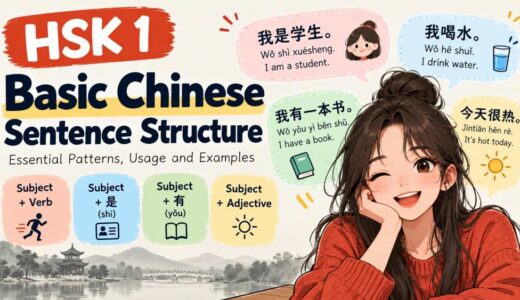
Pattern: Subject + 有 + Noun/Noun Phrase
Examples:
- 我有一本书。 / Wǒ yǒu yì běn shū. / I have a book.
- 他有一个手机。 / Tā yǒu yí ge shǒujī. / He has a mobile phone.
- 我有两个哥哥。 / Wǒ yǒu liǎng ge gēge. / I have two older brothers.
- 她有一个妹妹。 / Tā yǒu yí ge mèimei. / She has a younger sister.
- 我们有三个老师。 / Wǒmen yǒu sān ge lǎoshī. / We have three teachers.
In these sentences, 有 is the predicate, expressing possession or a relationship between the subject and the noun that follows.
5.2. Asking Questions About Possession with 有
To ask whether someone has something, you can use a question with 吗 or the affirmative-negative pattern 有没有.
Pattern 1: Subject + 有 + Noun + 吗?
Examples:
- 你有手机吗? / Nǐ yǒu shǒujī ma? / Do you have a mobile phone?
- 你有哥哥吗? / Nǐ yǒu gēge ma? / Do you have an older brother?
- 你有时间吗? / Nǐ yǒu shíjiān ma? / Do you have time?
Pattern 2: Subject + 有没有 + Noun?
Examples:
- 你有没有手机? / Nǐ yǒu méiyǒu shǒujī? / Do you have a mobile phone?
- 他有没有妹妹? / Tā yǒu méiyǒu mèimei? / Does he have a younger sister?
Both patterns can be used to ask about possession.
Example conversations:
A: 你有手机吗? / Nǐ yǒu shǒujī ma? / Do you have a mobile phone?
B: 有。 / Yǒu. / Yes, I do.
A: 你有没有电脑? / Nǐ yǒu méiyǒu diànnǎo? / Do you have a computer?
B: 没有。 / Méiyǒu. / No, I don’t.
5.3. Negating Possession with 没有
When expressing that someone does not have something, Chinese uses 没有.
Pattern: Subject + 没有 + Noun
Examples:
- 我没有手机。 / Wǒ méiyǒu shǒujī. / I don’t have a mobile phone.
- 他没有哥哥。 / Tā méiyǒu gēge. / He doesn’t have an older brother.
- 我今天没有时间。 / Wǒ jīntiān méiyǒu shíjiān. / I don’t have time today.
Do not use 不有 to negate possession.
This structure was introduced in the previous lesson on Chinese negation. Here, you only need to remember how 有 and 没有 are used when talking about what someone has or does not have.
6. Difference Between 的 (de) and 有 (yǒu)
Although 的 and 有 can both appear in sentences related to possession, they have different grammatical functions.
6.1. Comparison of 的 and 有
| Feature | 的 (de) | 有 (yǒu) |
|---|---|---|
| Part of speech | Structural particle | Verb |
| Function | Connects a possessor with the person or object being described | Expresses having or possessing something |
| Structure | Possessor + 的 + Noun | Subject + 有 + Noun |
| Example | 我的书 / Wǒ de shū / My book | 我有书。 / Wǒ yǒu shū. / I have books. |
| Negation | Depends on the sentence containing the possessive phrase | 没有 |
| Question form | 谁的 (whose) | 有……吗? or 有没有……? |
6.2. Comparing Two Ways to Express Possession
Consider these two sentences:
这是我的书。 / Zhè shì wǒ de shū. / This is my book.
我有一本书。 / Wǒ yǒu yì běn shū. / I have a book.
In the first sentence, 我的书 is a possessive noun phrase. The speaker identifies the book as belonging to them.
In the second sentence, 有 is the main verb, indicating that the speaker has a book.
Both sentences relate to possession, but their meanings and grammatical structures are not identical.
Similarly:
这是他的手机。 / Zhè shì tā de shǒujī. / This is his mobile phone.
他有手机。 / Tā yǒu shǒujī. / He has a mobile phone.
The first sentence identifies the owner of a particular phone. The second simply states that he has a phone.
6.3. Using 的 and 有 in the Same Sentence
的 and 有 can appear together in the same sentence because they perform different grammatical functions.
Examples:
- 我的朋友有手机。 / Wǒ de péngyou yǒu shǒujī. / My friend has a mobile phone.
- 他的老师有一本书。 / Tā de lǎoshī yǒu yì běn shū. / His teacher has a book.
- 我妈妈有一个电脑。 / Wǒ māma yǒu yí ge diànnǎo. / My mother has a computer.
In 我的朋友有手机, 我的朋友 is the subject, while 有手机 is the predicate. 的 connects 我 with 朋友, while 有 expresses that the friend has a mobile phone.
This combination is very common in everyday Chinese.
7. Common Mistakes with Pronouns, Demonstratives, and Possession
Beginners often make mistakes by placing 的 incorrectly, using 有 instead of 是, or omitting measure words after 这 and 那.
| Mistake | Incorrect or Unsuitable Expression | Correct Expression |
|---|---|---|
| Placing 的 incorrectly | 我书的 | 我的书 / Wǒ de shū / My book |
| Using 有 to identify someone’s occupation | 他有老师。 (when the intended meaning is “He is a teacher”) | 他是老师。 / Tā shì lǎoshī. / He is a teacher. |
| Omitting the measure word before a countable noun | 这个书 | 这本书 / Zhè běn shū / This book |
| Using 不有 to negate possession | 我不有手机。 | 我没有手机。 / Wǒ méiyǒu shǒujī. / I don’t have a mobile phone. |
| Confusing a question about possession with a question about ownership | 你有这本书吗? (when asking who owns the book) | 这本书是谁的? / Zhè běn shū shì shéi de? / Whose book is this? |
| Adding 的 unnecessarily to a demonstrative noun phrase | 这个的手机 (when the intended meaning is “this mobile phone”) | 这个手机 / Zhège shǒujī / This mobile phone |
Some of these mistakes come from translating word by word from English. For example, “my book” must be expressed as 我的书, with the possessor before 的 and the noun after it.
You should also distinguish between asking who owns something and asking whether someone has it.
你有这本书吗? / Nǐ yǒu zhè běn shū ma? / Do you have this book?
这本书是谁的? / Zhè běn shū shì shéi de? / Whose book is this?
The first question asks whether the listener has the book. The second asks who owns it. These are different meanings, even though both questions refer to the same object.
Personal pronouns, demonstratives, and possessive structures form an essential foundation for HSK 1 learners who want to talk about people and objects in everyday situations. You should remember how to use 我, 你, 他, 她, and their plural forms, understand the difference between 这 and 那, and know when to place a measure word before a countable noun.
More importantly, learn to distinguish between 的 and 有. 的 connects a possessor with the person or object being described, while 有 is a verb expressing that someone has something. To ask who owns an object, use 谁的. To ask whether someone has something, use 有……吗 or 有没有.
Once you understand these structures, you can combine them to form complete sentences such as 这是我的书, 我的朋友有手机, and 这本书是谁的, allowing you to communicate more naturally and confidently in Mandarin Chinese.